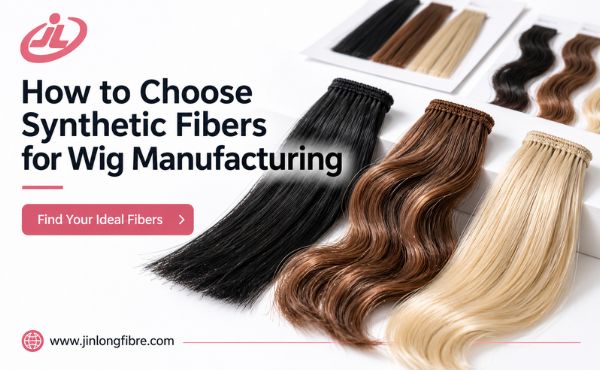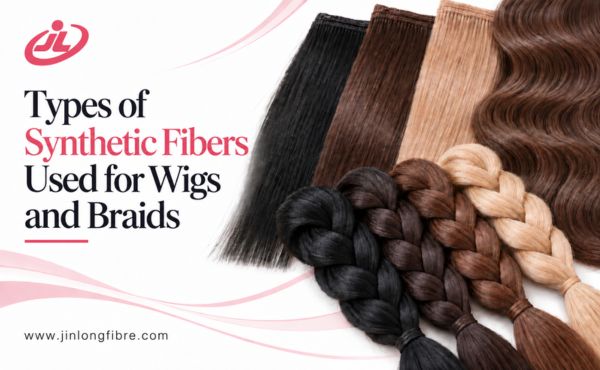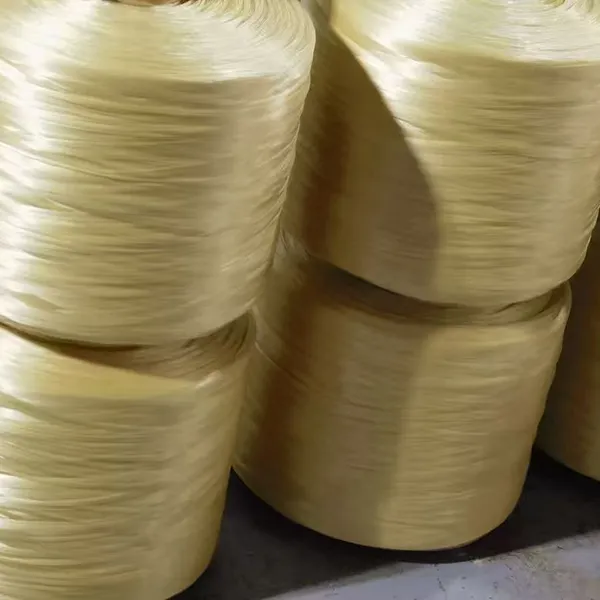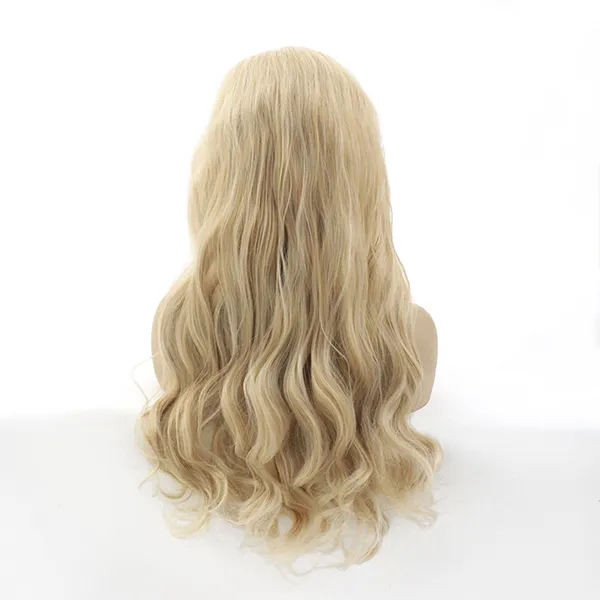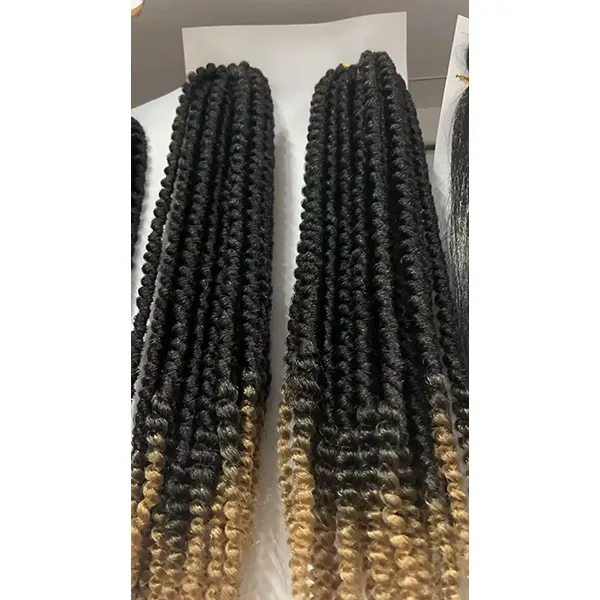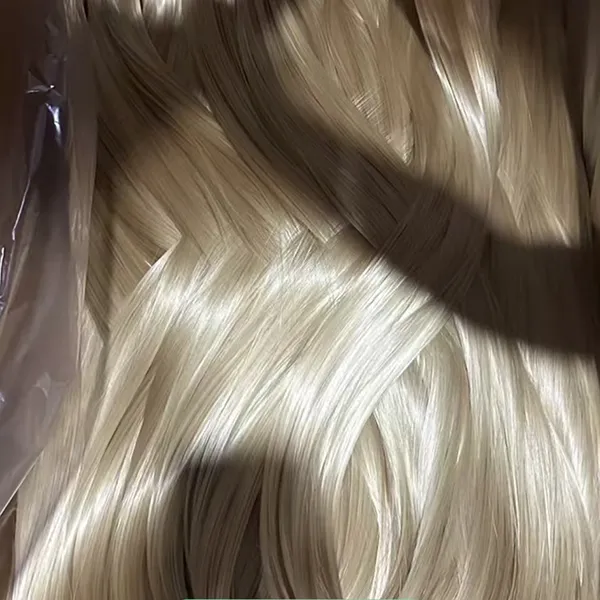
Choose synthetic fibers for wig manufacturing by matching a defined fiber grade to the finished wig’s length, texture, construction, styling requirements and care routine. Polymer identity and heat tolerance matter, but they are not enough. The material must also maintain acceptable appearance and handling through production and intended use.
The most reliable selection process starts with a product brief, compares candidates under the same conditions and validates them in an assembled wig. This prevents a soft sample bundle or a familiar material name from becoming the only basis for a production decision.
Define the Wig’s Requirements Before Comparing Materials
Begin with the product that the customer will receive. Specify the finished style, fiber length, desired fullness, shade arrangement and intended styling flexibility. A short, ready-styled wig and a long wig marketed for repeated restyling have different qualification needs.
Define the construction as well. Machine-made wefts, hand-tied areas and other attachment methods place different demands on handling. The fiber must work with the manufacturer’s actual equipment and assembly practices.
The care promise belongs in the brief from the beginning. If the product is intended to retain its style through washing, establish an approved wash routine and an acceptable post-wash appearance. If thermal restyling is offered, identify the tool method that will be validated.
Avoid vague requirements such as “premium quality” or “human-hair feel” without a reference. Translate them into assessable characteristics: acceptable gloss under specified lighting, movement in the intended length, manageable ends and a defined texture after cleaning.
This also reveals conflicting goals. More visible fullness may increase finished weight or alter movement. A very smooth surface may help combing but affect knot handling. Resolve these tradeoffs in the product design instead of assuming one fiber can maximize every property.
Identify the Grade Behind the Commercial Name
Ask for the polymer family and supplier grade code. Modacrylic, polyester, PVC-based materials and engineered combinations are not interchangeable categories. Even within one family, formulation and manufacturing history can change performance.
Brand names require particular care. Kaneka identifies distinct hair-fiber lines, including modacrylic, flame-retardant polyester and PVC products. A broad brand reference therefore cannot substitute for identification of the specific material being offered.
For blends, establish whether the product combines separate filament types or uses a composite filament structure. These are different arrangements. A physical mix can contain strands with different thermal responses; a core-and-sheath filament is engineered as one strand with multiple regions.
Request the information needed for your intended process without demanding unrelated proprietary details. Useful documentation includes grade identity, fineness range, available lengths, delivered preparation, recommended processing conditions and applicable performance reports.
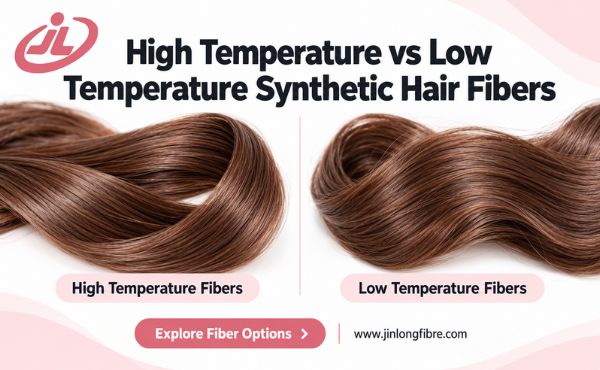
Do not use a “high-temperature” or “low-temperature” label as the final specification. Translate the label into the actual permitted method, exposure conditions and acceptance criteria. A material’s melting point is not a complete measure of its usable styling behavior.
Compare Handling at the Intended Length and Texture
Evaluate candidates in a comparable preparation. Differences in bundle weight, finishing, length and texture can make an informal comparison misleading. Keep those variables consistent or record them explicitly.
Fineness affects the amount of fiber supplied per unit mass, but denier and dtex are linear-density measurements rather than direct diameter values. Strand shape and polymer density also matter. Compare movement and fullness in the intended wig rather than choosing solely by the lowest fineness number.
Length deserves a separate trial. A fiber that combs well in a short sample may be less manageable when made into long hair. Longer strands have more opportunity to contact one another and the wearer’s clothing, particularly around the ends and nape.
Evaluate Appearance Under Consistent Lighting
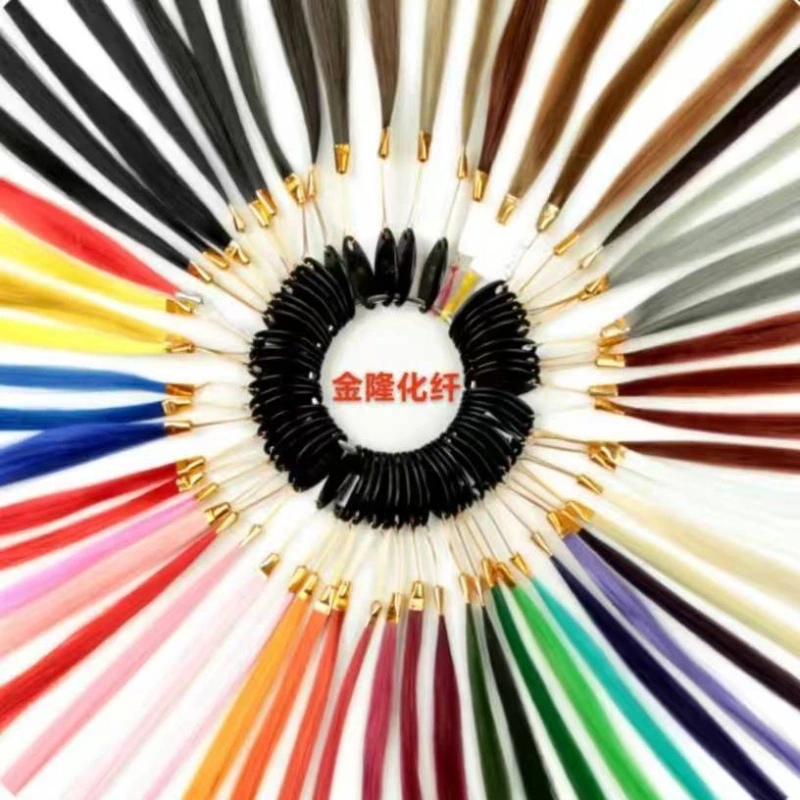
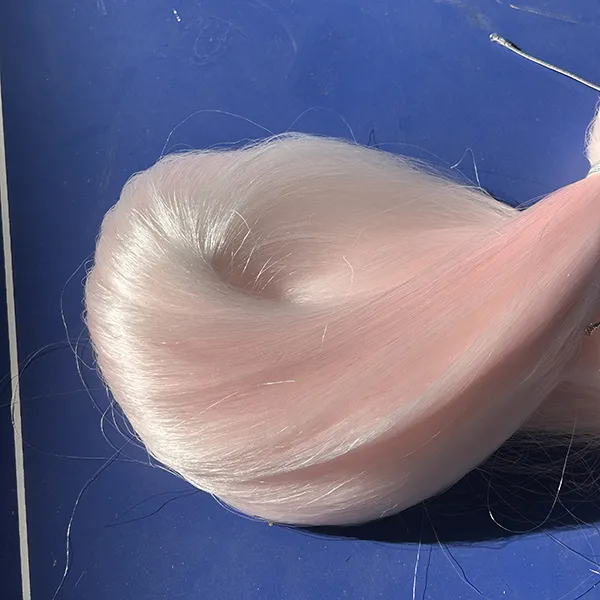
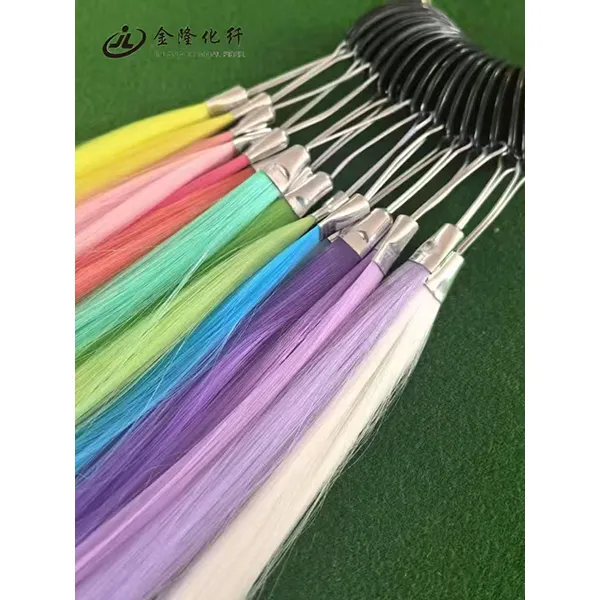
Assess gloss, color and shade blending under diffuse and directional light. Use a physical color reference with defined lighting conditions. Digital photographs are useful for communication but should not be the sole standard for approving production color.
Evaluate Handling Before and After Cleaning
Compare detangling, end roughness and movement after the approved care cycle. This helps distinguish enduring performance from the effect of a fresh surface finish. Record the comb, technique and sample condition so the trial can be repeated.
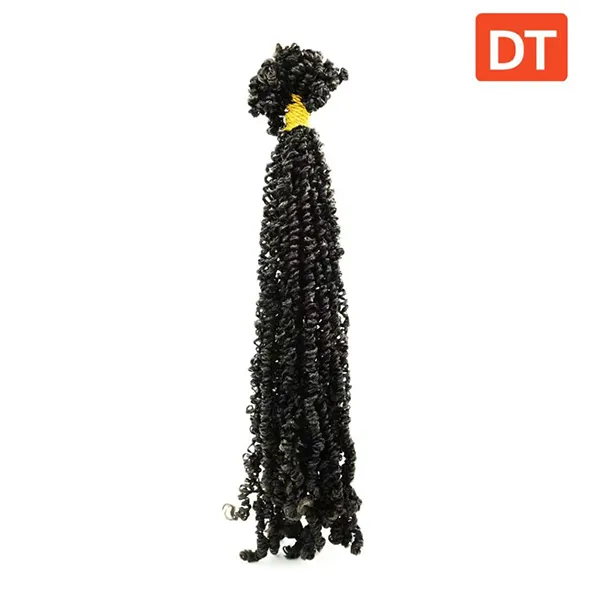
Assess textured fibers in the intended state. Combing a tightly curled sample into straightness may answer a different question from whether it remains manageable with the recommended consumer care method.
Validate the Fiber Through Wig Production
Run a pilot using the production route planned for the order. Include the relevant separating, combing, wefting, knotting, setting and finishing operations. A material should not be approved on raw-fiber tests alone when its main risks appear during assembly.
For thermal processing, record temperature, exposure time, heating method, bundle size and restraint. A successful loose-strand test does not establish uniform heating in a dense finished wig. Likewise, compatibility with steam does not automatically establish compatibility with direct-contact tools.
Keep an untreated control and a retained approved sample. If the pilot develops rough ends or uneven texture, those references help distinguish incoming material differences from production effects.
Record production losses and interruptions using the same definitions for each candidate. Separate fiber breakage from attachment failure or combing waste. Combining every loss into one number can conceal whether the material or the assembly method needs adjustment.
The pilot should finish with an assembled-product assessment: overall shape, manageable ends, acceptable color, attachment integrity and appearance after the approved care routine. This connects selection to the item being sold.
Build Batch Controls Around the Approved Material
Sample approval is only useful if later deliveries can be compared with it. Agree on the grade code, delivered form, shade standard, texture reference and permitted variation before routine supply begins.
| Control | What to specify | Why it matters |
|---|---|---|
| Material identity | Grade and declared composition | Prevents unqualified substitution |
| Delivered form | Length, texture and bundle preparation | Supports consistent production handling |
| Appearance | Retained shade and texture standards | Makes approval repeatable |
| Thermal performance | Agreed method and exposure conditions | Connects claims to the actual process |
| Traceability | Lot identification and change notification | Supports investigation of variation |
Set acceptance limits according to the product’s requirements and validated trial results. Do not borrow arbitrary pass values from another wig design. Where laboratory testing is needed, agree on the method as well as the limit.
Ask for notification of changes that could affect approved behavior, such as a different grade, finish or processing route. A substitute that looks similar may still require a new pilot. This is especially relevant when a product’s care label includes thermal styling claims.
Frequently Asked Questions
Should every style in a wig collection use the same fiber?
Not necessarily. One grade may simplify supply, but it should meet each style’s requirements. Validate the most demanding lengths, textures and constructions rather than assuming approval for one design covers the whole collection.
How many samples are enough for approval?
There is no universal number. Use enough material to complete the planned pilot and retain references. Where repeatability is important, include independently produced lots rather than only several bundles from one preparation.
Can a substitute fiber be accepted under the existing grade name?
Only after its identity and relevant performance have been established. If composition, finish or processing behavior changes, treat the substitute as a controlled change and determine whether requalification is needed.
Conclusion
Selecting synthetic wig fiber is a product-development decision supported by manufacturing evidence. Define the finished wig, identify candidate grades, compare them at the intended length and validate them through assembly and care. Then preserve the approved result through clear specifications, retained samples and lot controls. This provides a stronger basis for repeatable production than commercial labels alone.