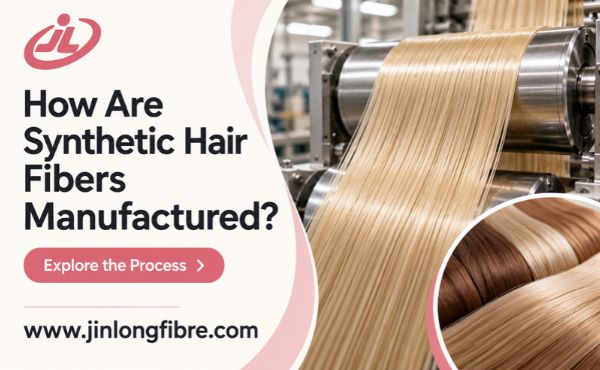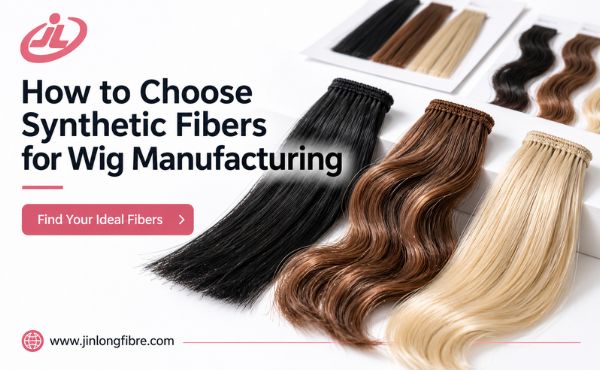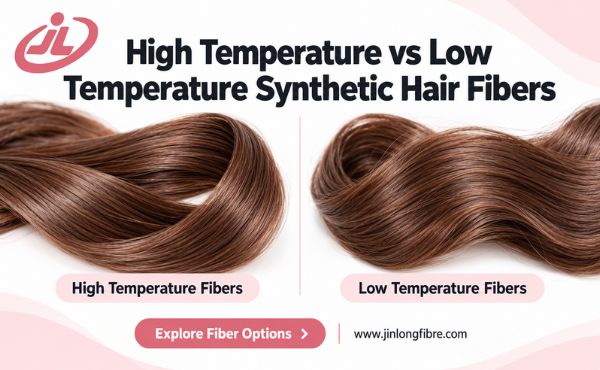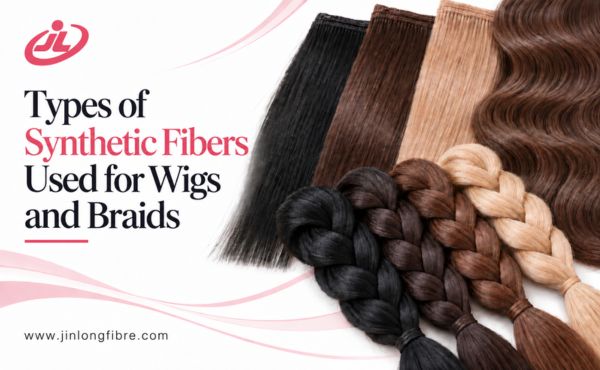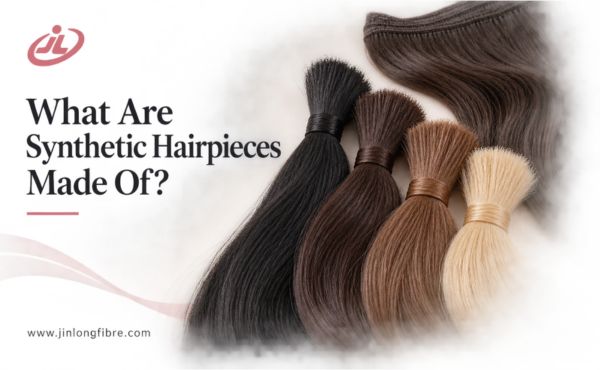
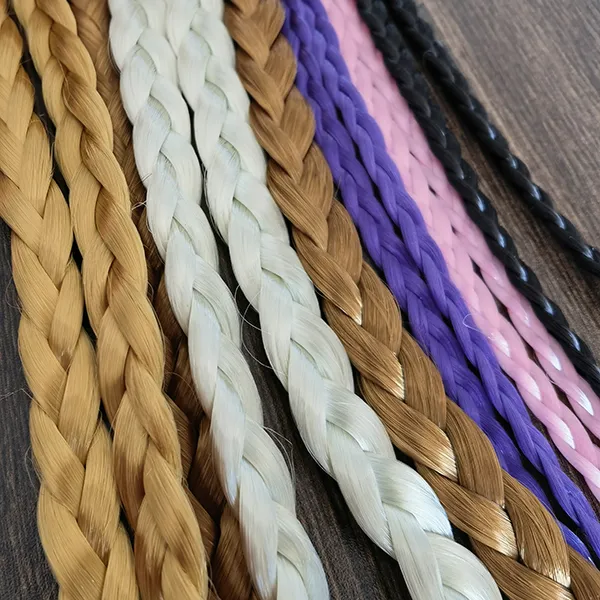
Synthetic hair fibers are manufactured by turning polymer materials into fine, continuous filaments and then adjusting those filaments to achieve the required color, texture, shine, strength, and styling behavior. The basic sequence is material preparation, spinning, drawing, heat setting, texturing, finishing, and inspection. The exact process depends on the polymer: polyester can be melt spun, while some acrylic fiber routes use a polymer solution and wet spinning. Synthetic hair is therefore not made through one universal production method.
Synthetic Hair Fiber Materials
Common synthetic hair materials include modacrylic, polyvinyl chloride (PVC), polyester, and, in some products, polyamide or other engineered polymers. Each has different processing requirements and performance characteristics. Manufacturers choose materials based on the intended product, such as braiding hair, wigs, extensions, costume hair, or hairpieces.
Modacrylic and PVC are established materials for artificial hair. Polyester-based fibers are also used, with formulation and processing designed for the desired feel, appearance, and heat performance. These names alone do not determine final quality. Fiber diameter, polymer formulation, cross-section, drawing, heat treatment, and surface finishing all affect how the finished strand behaves. A product description should identify the fiber type and any product-specific limitations instead of relying on broad labels such as “premium synthetic.”
Polymer Preparation and Color Formulation
Production begins with the selected polymer in a form suitable for processing, such as pellets or a prepared spinning solution. For a melt-spun fiber, the polymer must be processed under controlled conditions so it melts evenly and can pass through the spinneret. For a solution-spun fiber, the polymer is dissolved or dispersed in a solvent system to create a spinning dope.
Color may be incorporated into the material before the filament is formed, or applied through a later dyeing or finishing process, depending on the polymer and production method. Pigments, colorants, and additives must be compatible with the base material and the spinning process. Poor dispersion can cause inconsistent color or defects; unsuitable additives may interfere with spinning or change the fiber’s surface and mechanical behavior.
The manufacturer also establishes the target filament specifications, including fineness, color, luster, straightness or curl, and intended heat response. These requirements guide the choice of polymer composition and process settings.
Spinning the Filaments
In spinning, the prepared polymer is pushed through small openings in a spinneret to form continuous filaments. This is the step that creates the basic strand shape. Manufactured fibers commonly use melt, wet, dry, or gel spinning; the appropriate route depends on the polymer and formulation.
In melt spinning, heated polymer flows through the spinneret and then cools and solidifies into filaments. Patent literature describes polyester-based artificial hair fibers made by melt spinning, followed by drawing. Some acrylic fiber routes instead use wet spinning: a polymer solution passes through a spinneret into a coagulation bath, where the polymer solidifies into filaments. A recent patent describes coagulation followed by wet and dry drawing and then crimping.
The spinneret design and process control influence filament diameter, cross-section, and uniformity. A strand’s cross-section need not be perfectly round. Manufacturers can engineer fiber shape to influence luster, feel, or how the strand handles light, although the actual result depends on the full material and finishing system.
Drawing and Heat Setting
Freshly spun filaments may need drawing, a controlled stretching step that reduces their diameter and develops their physical properties. Drawing can be performed continuously after spinning or as a separate operation, depending on the production line and material. The amount and conditions of drawing affect filament size and behavior, so they must be matched to the polymer and the intended use.
After drawing, heat treatment may stabilize the filament or set a desired shape. Heat setting is not simply “making synthetic hair heat-resistant.” It helps establish the fiber’s form and response, but the finished product’s safe styling temperature depends on the fiber formulation, construction, and manufacturer’s testing. It should not be inferred from a generic material name.
For a product designed to hold a curl or wave, heat treatment may be combined with mechanical or thermal forming. The goal is to create a repeatable shape without compromising the required strength, flexibility, or appearance.
Texture, Crimping, and Surface Finishing
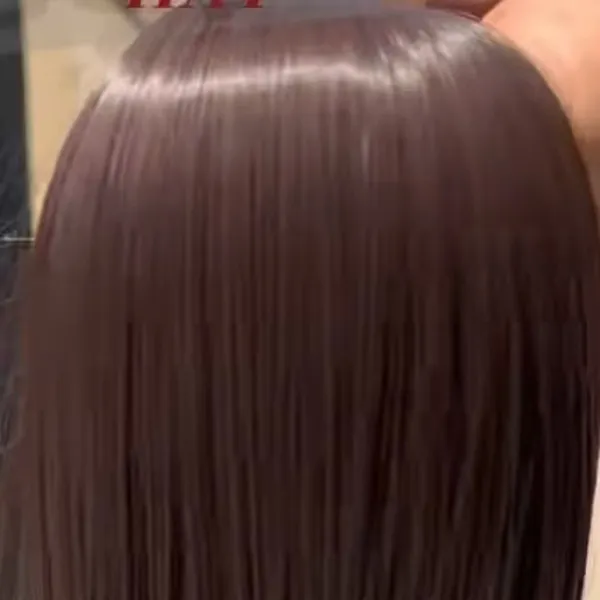
Straight filaments can be further processed to create waves, curls, or crimped textures. Mechanical crimping and heat-based treatments are among the approaches used in artificial hair production. Patent examples describe crimping after fiber spinning and drawing.
The manufacturer may also apply a finishing treatment to adjust surface feel, friction, luster, or handling. Finish chemistry and application can affect how fibers slide against one another, tangle, or feel during use. A coating is not a substitute for sound fiber design: it cannot correct inconsistent diameter or weak filaments, and its performance may change with washing and wear.
The production line may combine fibers of different colors, lengths, or textures to create a particular product specification. For wig and extension production, those fiber bundles are then cut or prepared for attachment to a cap, weft, braid, or other base. That assembly stage makes the finished hair product; it is separate from the manufacture of the fiber itself.
Fiber Inspection and Wig Production
Before fibers are packed or sent for hairpiece assembly, manufacturers may inspect them for consistency against the production specification. Relevant checks can include color uniformity, filament diameter, tensile behavior, texture, luster, length, and appearance. The inspection plan should reflect the product’s intended use; not every test applies to every fiber type.
For buyers, a clear specification is more useful than a broad quality claim. Confirm the polymer type, color standard, filament or bundle requirements, texture, length, packaging, and the product’s heat-styling instructions. If the fibers will be used in braiding hair, wigs, or extensions, request samples made to the same specification as the intended order so that appearance and handling can be reviewed before production.
Manufacturing Variables That Affect Fiber Quality
Several linked variables determine the finished result:
- Polymer and formulation: These determine the available processing route and contribute to properties such as flexibility and thermal behavior.
- Spinneret and process control: These affect the consistency and shape of the filaments.
- Drawing and heat treatment: These influence dimensions, strength, and shape retention.
- Crimping and surface finish: These change texture, luster, friction, and handling.
- Color and finishing controls: These determine whether production lots match the approved appearance.
- Inspection criteria: These establish how the manufacturer detects deviations before shipment.
A change in one step can affect later steps. For example, a new formulation may require different spinning conditions; a surface treatment may alter handling even if the underlying filament remains unchanged. Buyers should therefore approve a sample against explicit specifications rather than judging quality from a fiber name alone.
FAQs
Is all synthetic hair made by melt spinning?
No. Melt spinning is used for suitable thermoplastic polymers, including some polyester-based fibers. Other materials may require solution-based methods such as wet spinning. The process depends on the polymer and formulation.
Does heat setting make synthetic hair safe for hot tools?
Not necessarily. Heat setting can stabilize a fiber’s shape during manufacturing, but it does not establish a universal safe styling temperature. Follow the finished product’s specific instructions.
Are synthetic hair fibers made one strand at a time?
The fiber line forms many continuous filaments through spinneret openings. Those filaments may later be grouped, textured, cut, or assembled into wigs, braids, and extensions.
Can two fibers made from the same polymer perform differently?
Yes. Formulation, filament geometry, drawing, heat treatment, texturing, and finishing can all affect the finished fiber.
Conclusion
Synthetic hair fibers are manufactured through a controlled sequence that converts polymers into filaments and then develops their dimensions, shape, color, texture, and surface characteristics. The process varies by material: some fibers are melt spun, while others use solution-based spinning. For product selection or sourcing, polymer type is only a starting point; specifications, sample approval, and product-specific performance information are also essential.